
Dry Skin in Menopause: My Midlife Skin and Scalp Story
Updated: Sep 4
By Petula Flavius, MHA
Published: August 2026 · 6 min read
Disclosure: This article contains affiliate links. If you make a qualifying purchase through these links, I may earn a small commission at no additional cost to you. I only share products that I personally use or genuinely recommend.
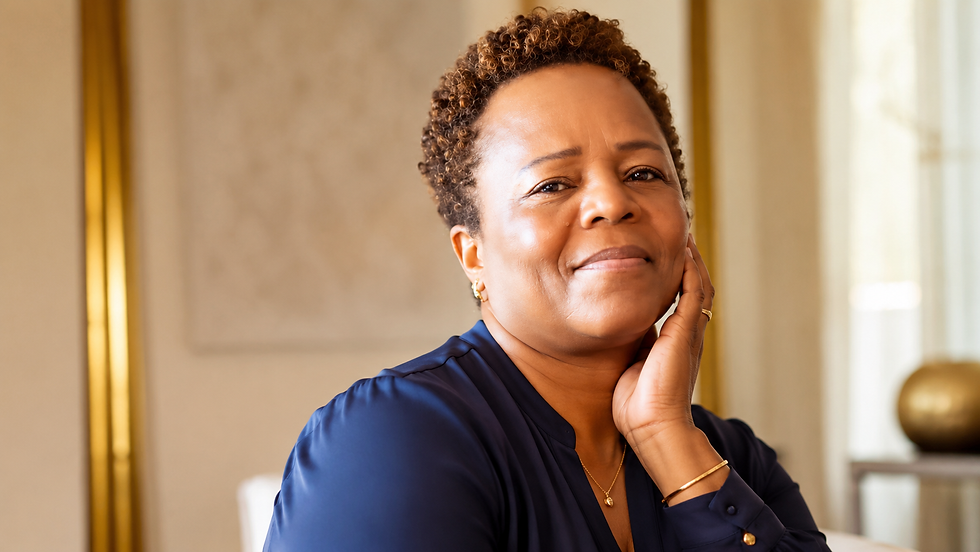
Why is my skin so dry in menopause—and why is my scalp itchy and flaky? These midlife changes may involve hormones, products, and personal triggers.
For years, I gave it the same easy answer everyone gives it: it's just dandruff. Flaky scalp, a little itch, grab whatever shampoo was on sale, and move on with my day.
Then I got older, and I got wiser. Somewhere in my forties, I stopped accepting the convenient answer and started actually paying attention to my own body instead of just reacting to it.
That's when I noticed something the "it's just dandruff" story never accounted for. My scalp got worse when my sugar intake went up. Not in a vague, maybe-it's-a-coincidence way. In a pattern I could set my watch to.
In my experience, my scalp symptoms worsen when my sugar intake increases. Every woman's body is different, but this pattern was too consistent for me to ignore.
I'm not a dermatologist, and I'm not here to tell you sugar is the villain behind every itchy scalp on the planet. What I am telling you is this: dry, itchy, flaky skin and scalp in midlife deserve more than a lifetime of "it's just dandruff." There's real science behind why our skin changes now, there are real differences between the things that can cause an itchy scalp, and there's a real routine I built once I decided to stop guessing and start listening.
Let's get into it.
Why This Matters for Women in Midlife
If your skin and scalp feel like they belong to a stranger lately—tighter, drier, itchier, or flakier than they used to be—you are not losing your mind and you are not being dramatic. Something in your body actually changed, and it has a name: estrogen.
Estrogen does more behind the scenes than regulate your cycle or show up in a hot flash. It helps your skin hold onto moisture, supports your natural oil production, and helps maintain the collagen and elastin that give skin its thickness and bounce. When estrogen declines in perimenopause and menopause, all of that shifts at once. That's exactly why so many of us notice dry skin, a drier scalp, and more reactive, sensitive skin showing up in the same season as our other midlife symptoms.
This is not vanity. It's physiology. It deserves the same respect you'd give a hot flash or a sleepless night.
What Causes Dry Skin in Menopause (and Scalp Changes)
Estrogen supports the hyaluronic acid, natural oils, and other compounds that keep skin hydrated from the inside out, and it also supports the collagen and elastin that keep skin firm and thick. Skin collagen actually peaks around age 30, right around when estrogen production peaks too, so as estrogen declines in midlife, collagen and elastin decline right along with it.
That combination can show up as:
Drier skin that feels tight, rough, or flaky
Thinner skin that reacts or marks more easily
Slower healing when skin is irritated
More sensitivity to products, temperature, and friction that never used to bother you
Your scalp is skin too, which is exactly why scalp dryness and itching so often show up in the same stretch of life as everything else.
Dry Scalp, Dandruff, and Seborrheic Dermatitis: What's the Difference?
This is the part I wish someone had explained to me twenty years ago.
Dry Scalp: Happens when the skin on your head simply doesn't have enough moisture, often from harsh products, hot water, or dry air. The flakes tend to be smaller, and the scalp usually feels tight rather than oily.
Dandruff: A different animal altogether. It's typically linked to an overgrowth of a yeast called Malassezia combined with excess oil. The flakes tend to be larger, often appearing alongside a scalp that feels oily rather than dry.
Seborrheic Dermatitis: Dandruff's more inflamed cousin. Same basic process, but with more redness, greasy yellow or white scales, and noticeable irritation. Stress, fatigue, and seasonal changes can all make it flare.
Knowing which one you're actually dealing with matters, because "just moisturize more" is the right answer for dry scalp and the wrong answer for dandruff or seborrheic dermatitis, which tend to respond better to targeted ingredients like zinc pyrithione, salicylic acid, or ketoconazole.
When It May Be Something Else Entirely
Dry scalp and dandruff cover a lot of ground, but they're not the only explanations for an itchy, flaking scalp, and midlife is exactly the time to widen the list rather than narrow it.
Other possibilities worth knowing about:
Eczema or contact dermatitis: Often triggered by a new shampoo, dye, or styling product
Psoriasis: Tends to show up as thicker, well-defined scaly patches that can extend past the hairline
Fungal infections: Conditions like scalp ringworm spread easily and need medical treatment
Product buildup: Irritation from styling products, heat tools, or over-washing
None of this means something is seriously wrong. It does mean a persistent or worsening scalp issue deserves a real look rather than a permanent "it's just dandruff" label—the label I wore for far too many years.
What the Research Actually Says (and What We Still Don't Know)
Research clearly shows that declining estrogen affects skin hydration, oil production, and collagen. That part is well established. Far less settled is exactly how individual triggers like sugar, stress, sleep, or specific ingredients interact with those hormonal changes for any one woman. Hormonal changes may influence oil production and inflammation in ways that make skin more reactive overall, but that doesn't mean every ingredient or food is the cause for every woman's symptoms.
That's exactly why I frame my sugar observation as mine. It's a real, repeated pattern in my own body, not a medical claim about yours. Your pattern might be stress, or a product, or something else entirely. The point isn't to copy my trigger. It's to go find yours.
Taking Care of My Skin
Once I stopped assuming dryness was just something to tolerate, my routine got simpler, not more complicated:
I wash with lukewarm water instead of hot, which strips less of my skin's natural oil.
I use a gentle cleanser rather than a harsh soap.
I moisturize right after bathing, while my skin is still a little damp, so the moisture gets locked in.
I don't skip sunscreen, because sun damage makes every one of these changes worse.
I pay attention to how my skin actually reacts to a product before I commit to it.
I take hydration, sleep, and stress seriously, because all three show up on my skin whether I acknowledge them or not.
Consistency is what midlife skin actually responds to.
Taking Care of My Scalp
My scalp routine changed the same way. Less assuming, more paying attention:
I use products suited to what my scalp is actually dealing with, not just whatever smells good.
I rinse shampoo thoroughly, because leftover residue is its own irritant.
I don't scratch aggressively, even when the itch is loud.
I limit heat styling, which pulls even more moisture out of an already dry scalp.
I clear out styling-product buildup regularly instead of layering product on top of product.
I watch my own triggers instead of assuming every flake means the same thing.
Caring for my scalp stopped being about hiding flakes and started being about treating the scalp I actually have now.
Products in My Midlife Routine
The Shampoo I Reach For
Part of getting more intentional meant getting more selective about what I actually put on my scalp. One of the shampoos in my rotation is Ojaijay Natural Rosemary Peppermint Shampoo. The rosemary-and-peppermint experience feels like a small ritual—cooling and awake—instead of just another bottle in the shower.

A refreshing, gentle formula designed to support a clean, invigorated scalp environment without harsh stripping.
The Lotion That Became a Favorite
Midlife dry skin is no joke, and this is the lotion that turned an ordinary step into something I actually look forward to: eos Shea Better Body Lotion in Vanilla Cashmere.
It feels rich and moisturizing without sitting heavy, and the Vanilla Cashmere scent turns two minutes of moisturizing into a small moment of self-care in the middle of a busy day.
Featured Product: eos Shea Better Body Lotion – Vanilla Cashmere

Rich hydration that absorbs smoothly to protect and nourish midlife dry skin barriers.
When to See a Dermatologist
Most dry skin and scalp changes in midlife are manageable at home. A few symptoms deserve a professional look instead of a home remedy:
Itching or flaking that doesn't improve with consistent care
Pain, severe scaling, or thick plaques
Open sores, bleeding, or signs of infection
A rash that is spreading
Sudden or patchy hair loss
Genuine uncertainty about whether you're dealing with dryness, dandruff, eczema, psoriasis, or something else
A dermatologist can look at your actual scalp and give you a clear, individualized diagnosis.
Questions to Ask Your Healthcare Provider
If dryness, itching, or flaking has become a real concern, bring these questions to your next appointment:
Could something besides menopause be contributing to these skin or scalp changes?
Is this dryness, dandruff, seborrheic dermatitis, eczema, or psoriasis, and how can we tell the difference?
Are there specific labs or a referral to a dermatologist that would help?
Could any current medications, supplements, or topical products be part of the issue?
What specific changes should prompt me to come back sooner rather than later?
What I Want Women to Remember
Your body is not betraying you. It's changing, and it's asking you to care for it differently than you did ten years ago. That's not failure. That's wisdom.
Listen to your body with curiosity instead of shame. Notice your patterns. Ask better questions, and bring those questions to your doctor instead of a search engine at midnight. Bring them to God too. Wisdom, patience, and the courage to advocate for yourself are things I believe He gives generously to women willing to ask.
Sis, you're not alone. You are not failing because your body needs different care now. You are learning how to nurture the woman you are becoming.
Let's Talk
Have you noticed changes in your own skin or scalp lately? Have you found a food, product, or routine that seems to make a difference for you? Share your thoughts in the comments below.
For more midlife encouragement and practical resources, visit the Midlife Women 40+ Resource Center.
About the Author
Petula Flavius, MHA is a healthcare administrator, midlife empowerment advocate, writer, and speaker dedicated to helping women navigate health transitions, listen to their bodies, and build intentional self-care rhythms. Explore more articles and tools at trulyflavius.com.
Medical disclaimer: This article shares personal experiences and general educational information. It is not medical advice or a substitute for individualized care from a qualified healthcare professional.


Comments